BONLAB BLOG
Thoughts
&
Scientific Fiction
Warwick drives green growth with £13.6M EPSRC hub in plastics
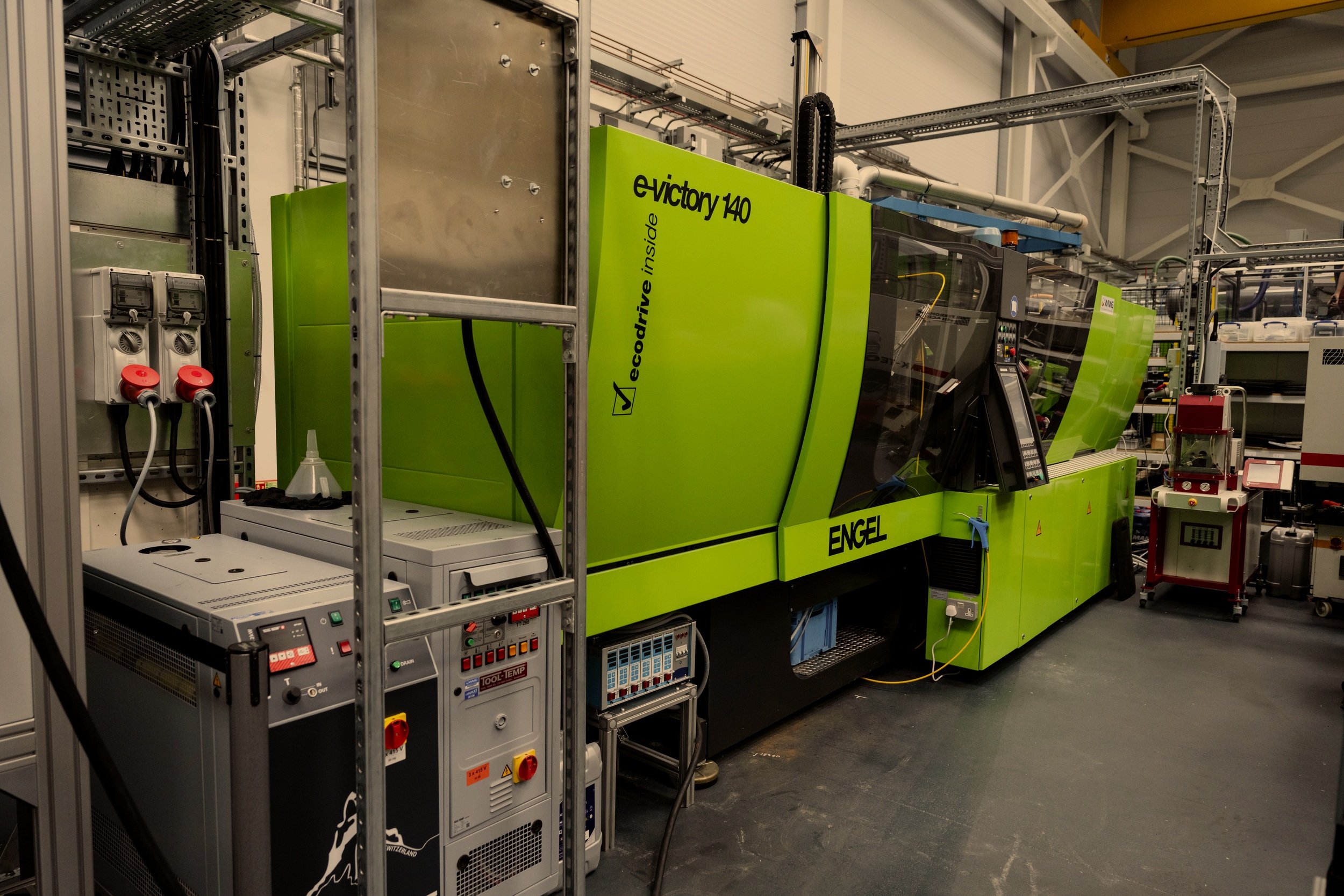
From developing greener materials and processes to growing more sustainable supply chains, a new £13.6 million research hub, funded by the Engineering and Physical Sciences Research Council (EPSRC), will help researchers at the University of Warwick tackle some of the UK’s biggest manufacturing challenges.
The new Manufacturing Research Hub in Sustainable Engineering Plastics (SEP) will be led by Professor of Polymer Processes, Ton Peijs, at WMG, and has Professor of Polymer and Colloid Chemical Engineering, Stefan Bon, at the Department of Chemistry as one of the co-investigators.
From developing greener materials and processes to growing more sustainable supply chains, a new £13.6 million research hub, funded by the Engineering and Physical Sciences Research Council (EPSRC), will help researchers at the University of Warwick tackle some of the UK’s biggest manufacturing challenges.
The new Manufacturing Research Hub in Sustainable Engineering Plastics (SEP) will be led by Professor of Polymer Processes, Ton Peijs, at WMG, and has Professor of Polymer and Colloid Chemical Engineering, Stefan Bon, at the Department of Chemistry as one of the co-investigators.
Researchers from Warwick will work, over the next seven years, alongside the University of Manchester and UCL to improve the way durable plastics – commonly used in cars, buildings, and electronics – are created, reused, and recycled. Researchers aim to reduce waste, support greener manufacturing practices, and advance the circular economy, with support from over 60 industry partners, including JLR, Polestar, Siemens, BEKO, Bellway, and Biffa, to turn research into real-world solutions.
By focusing on practical needs, the Hub will help move the UK toward a circular economy—where products are reused instead of thrown away. The work will support businesses in reducing waste and minimizing their environmental impact, while maintaining competitiveness. It will also strengthen local supply chains and help shape future policies that promote innovation and sustainability in the UK manufacturing sector.
Professor Ton Peijs, Project Lead, of the EPSRC Manufacturing Research Hub in Sustainable Engineering Plastics, said: “We’re incredibly proud to lead this vital initiative. Until now, most sustainability efforts in plastics have focused on single-use items and packaging. Yet engineering plastics - essential to modern life - present equally complex sustainability challenges that have, until now, largely been overlooked.
This Hub unites researchers, industry leaders, and policymakers to fundamentally rethink how engineering plastic parts are designed, reused, repaired and recycled. We’re focused on real-world impact: using greener materials, smarter manufacturing and recycling systems, and more sustainable supply chains.
This grant underscores the urgent need for innovation in this space, and we’re excited to drive meaningful, lasting change.”
Professor Stefan Bon, co-investigator, from the Department of Chemistry says: “We at Warwick, the University of Manchester, and UCL worked tremendously hard to get this initiative over the line. It is good to see that the UK government recognises the value of its polymer science and engineering capabilities. The next 7-8 years will be fantastic!”
The Hub is one of four, backed by a total of £44 million through the EPSRC the new Manufacturing Research Hubs for a Sustainable Future will bring together world-class researchers with over 180 industry and civic partners to drive practical, sustainable innovation across the UK.
Each hub will focus on a different critical area of manufacturing, including creating net-zero supply chains and resilient production systems, as well as transforming waste and reducing our reliance on fossil fuels.
Professor Charlotte Deane, Executive Chair of EPSRC, said: “These hubs will play a vital role in reshaping manufacturing to help the UK achieve green growth. By combining deep research expertise with real-world partnerships, they will develop the technologies, tools, and systems we need for clean, competitive, and resilient industries.”
For more info see UKRI: https://www.ukri.org/news/new-research-hubs-to-cut-carbon-and-reshape-uk-manufacturing/
Visualizing the drying and film formation of polymer latexes
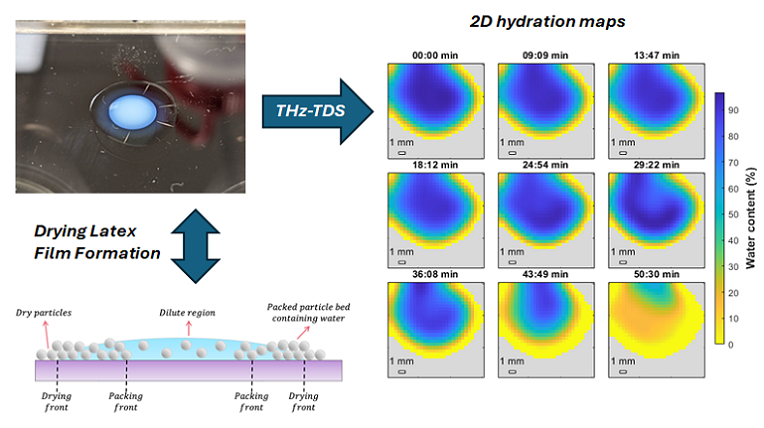
Polymer latex particles, typically 50-600 nm in diameter, are used in many applications, such as paper manufacturing, water-based adhesives, printing, and coatings. Visualizing this drying and film formation process in real time would greatly help in understanding how the properties of a dried film come about. In our paper, published in the American Chemical Society’s journal Langmuir, we used TeraHertz Time-Domain Spectroscopy (THz-TDS) to map the water content spatially in real-time during the drying process.
Polymer latex particles, typically 50-600 nm in diameter, are used in many applications, such as paper manufacturing, water-based adhesives, printing, and coatings. Commonly, a water-based formulation that contains these polymer colloids is used, often together with other components, such as pigments for opacity and color, fillers, and rheology modifiers. Each of the polymer latex particles consists of many individual polymer chains. These water-based dispersions are applied onto a substrate as a droplet or a film, after which these systems are dried. Upon evaporation of water, the individual components will pack closely. When little water remains in between, a so-called capillary under-pressure facilitates tight packing, and if the polymer latex particles are soft, it deforms them. The last stage of the film formation process is when polymer chains from one latex particle now diffuse into a neighboring latex particle and the other way around. This process ensures that the dried film has good adhesive and mechanical properties.
Visualizing this drying and film formation process in real time would greatly help in understanding how the properties of a dried film come about. In our paper, published in the American Chemical Society’s journal Langmuir, we used TeraHertz Time-Domain Spectroscopy (THz-TDS) to map the water content spatially in real-time during the drying process.

The use of TeraHertz Time-Domain Spectroscopy (THz-TDS) as a tool to visualize the water content in a drying polymer dispersion in real-time.
Emily Brodgen, a final year PhD researcher from BonLab, teamed up with Gonçalo Costa, a PhD researcher in the Department of Physics at the University of Warwick, working with the team of prof. Emma Pickwell-MacPherson, and together they studied the potentials THz-TDS could bring.
Prof. dr. ir. Stefan Bon says: “It is great to see this collaborative work. We believe that there are opportunities for THz-TDS to be used as an analytical tool in the field of water-based polymer dispersions, particularly how droplets or films dry after they have been deposited onto a surface. As you can read in the paper, which we very much see as a positioning study, there are great opportunities out there to refine the technique. We hope others are as enthusiastic as we are so that THz-TDS can be adopted wider as a measurement tool.”
The paper is freely available to all from ACS Langmuir and can be found here:
https://doi.org/10.1021/acs.langmuir.4c03103
For more information, please get in touch with prof. dr. ir. Stefan A. F. Bon directly.

Join BonLab as a PhD researcher in 2025
We are looking for enthusiastic and dedicated people to join the BonLab as a PhD student. Start dates are mid to end 2025. Do you have what it takes to work at the forefront in sustainable polymer and colloid chemical engineering?
You will be working under the guidance of prof.dr.ir. Stefan A. F. Bon on an exciting 4-year project in collaboration with industry in the area of polymer and colloid science. We have a number of fully funded opportunities available in my team.
We are looking for enthusiastic and dedicated people to join the BonLab as a PhD student. Start dates are mid to end 2025. Do you have what it takes to work at the forefront in sustainable polymer and colloid chemical engineering?
You will be working under the guidance of prof.dr.ir. Stefan A. F. Bon on an exciting 4-year project in collaboration with industry in the area of polymer and colloid science. We have a number of fully funded opportunities available in my team:
project 1: Next generation printing inks
This project deals with the fabrication of polymer colloids that contain pigments for inkjet printing. We will look at sustainable polymerization methods to fabricate pigment dispersions suitable for a range of printing techniques. Not only will we look at innovative fabrication methods, we will look at the formulation process involved during the processing into colloidal inks, and we will characterize the physical and mechanical properties of the materials made.
project 2: Nutraceuticals
This project will deal with the fabrication of a range of nutraceutical formulations. The project focuses on the synthesis of colloidal systems suitable for the delivery of beneficial agents. Beside fabrication, the project will look the underlying soft matter physics on how these formulations behave upon application. This project will be done in collaboration with the team of my colleague prof. Sebastien Perrier.
Enquiries, which should include a CV with the names of two referees, should be made to prof.dr.ir. Stefan A. F Bon (s.bon@warwick.ac.uk)
Requirements:
An eligible student must hold, or be predicted to obtain, at least a 2.1 4-year degree in Chemistry, Chemical Engineering, Physics, or an equivalent scientific discipline. Exceptional students with a 3 year BSc degree will also be considered. This studentship is open to UK nationals and those of equivalent status* (fees paid, plus annum stipend). Availability is for 4 years.
*Please note - ELIGIBILITY - Applicants from overseas ARE eligible for these posts, but need to find financial means to bridge the gap between home and overseas study fees.